Giulia Prati
An attack that was supposed to be of short duration is now entering its third month. Wherever one turns, images and news about the U.S. and Israel’s war against Iran are present. At times, statements or actions seem contradictory: shifting alliances, new battlefronts opening up, accusations, and reconciliations. But what may seem contradictory when focusing strictly on the Middle East becomes clear when one examines the global connections and processes. The ongoing conflict in Iran, in fact, is not driven solely by local dynamics but is part of a larger puzzle of different conflicts that can be called Third World War.
HOW TO DESCRIBE THE THIRD WORLD WAR?
By “Third World War,” it’s meant the system of war that broke out after the fall of the Berlin wall in 1989 and the consequent end of the Cold War1.
After the fall of the Berlin Wall, the U.S. found itself in the position of being the strongest representative and ambassador of capitalism in the world. From this position, violent interventions against regions and governments that were not in line with their view of “world order” were legitimized in the name of “exporting democracy” and “fighting terrorism,” as it happened in Afghanistan in 2001 and in Iraq in 2003. The fact that after the Cold War the world order has come to be dominated by a single capitalist bloc does not mean that conflict has disappeared; actually, quite the opposite.
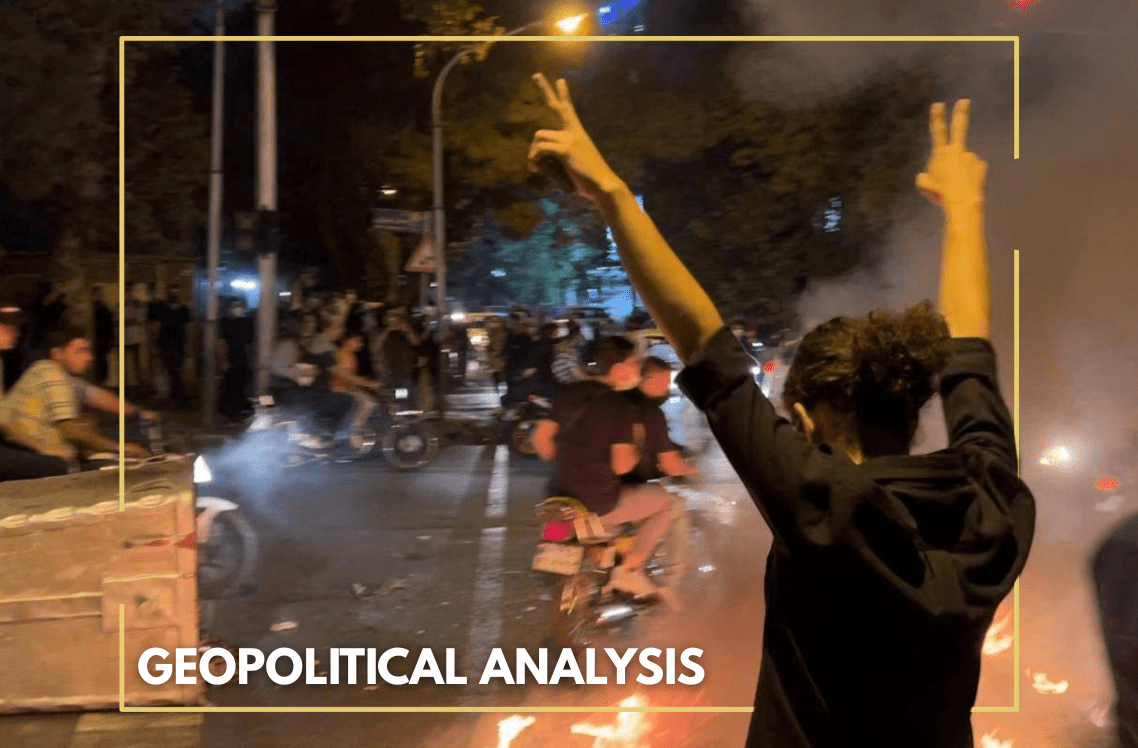
What has changed since the Cold War is the character of conflict. War is no longer waged with the only aim of annihilating the enemy; it is also waged with the aim of weakening the enemy while leaving it alive. This is evident in the situation in Iran. The regime was under serious threat due to the popular protests in January2. The intervention by the U.S. and Israel, in reality, did not endanger the regime, but saved it while simultaneously weakening it.
The reason for this approach to conflict and war comes from the capitalist world order: as soon as one bloc strengthens and becomes dominant, a second one emerges that seeks to dominate and represents a threat, and so on. It is a multi-polar system. All the different poles, all the different forces, however, are dependent on each other in various ways: economically, energetically, politically, militarily, and so on. In this sense, it is not always possible to completely destroy one’s enemy. One can think of a pyramid: every force wants to reach the top, and to do so, it needs enemies to climb over and stand upon, to exploit for the purpose of its own strengthening.
But who is actually suffering from this war system? Third World War is a total offensive against capitalism’s primary and structural enemy: society. Capitalism is a system of exploitation and theft. In order to survive and thrive, it needs a weak and fragmented society that it can use for its own needs. Above all, it needs a society that is dependent on capitalist system itself. A society that is able to provide for its own needs and that is self-determined threatens capitalism’s ability to exploit it. And so wars, but also propaganda, psychological warfare, and repression aim to strengthen the hegemonic system by attacking people.
The Third World War is a war of flexible and fragile alliances, a war that makes its way through media and economic warfare, a war that has its basis in gender violence, in patriarchal violence against women. In different regions and at different times, it can manifest itself through high-intensity or low-intensity warfare. It develops through connections that stretch across the whole world. A woman loses her job in Italy because the industry she worked for has shifted to military production, and a young man in Lebanon is shot by a weapon produced in that very same industry. The individual and collective crises experienced across the globe are interconnected, and being able to identify these links can strengthen collective resistance.
The idea of the Third World War is not a new one, and various thinkers and prominent figures have developed and used this concept. In early 2024, Pope Francis stated that “The third world war in pieces is turning into a real global conflict”3. Two years later, these words still seem to describe the reality of the conflicts around the globe.
The concept of Third World War, as interpreted in this article, has been particularly developed by the Kurdistan Liberation Movement. The Movement has been discussing it since the early 2000s. Abdullah Öcalan wrote in the early 2000s, “The empire of chaos, which we could also call Third World War, is not managed using military and political methods alone […]. Global economic and media corporations […] hope that by using their scientific and technological superiority, they can salvage capitalist society system from chaos and exit the crisis even stronger or, if this is not possible, at least minimize the damage as far as possible, restructuring if necessary”4.
EFFECTS AND DEVELOPMENTS IN MIDDLE EAST
The nation-state system took root in the Middle East following World War I. The hegemonic powers that played a leading role in the first global conflict devised a plan to fragment the Middle East in order to more easily control the resources located there: small nation-states are easier to manage. “Radical Islam,” which NATO has declared the new enemy since the 1990s, has since been used as an ideological pretext to wage regime-change wars in the Middle East and ensure the full establishment of capitalist hegemony. Within this framework, one can understand why the Middle East plays such a central role in the capitalist system’s project of global expansion, and thus why the chaos in this region is reaching such a level of escalation.
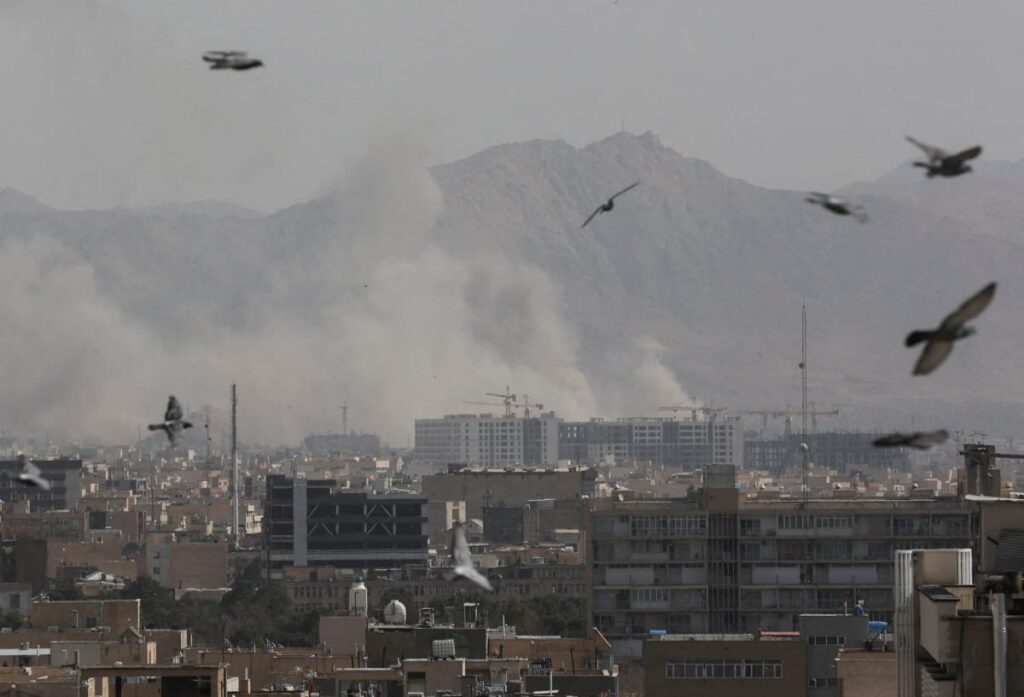
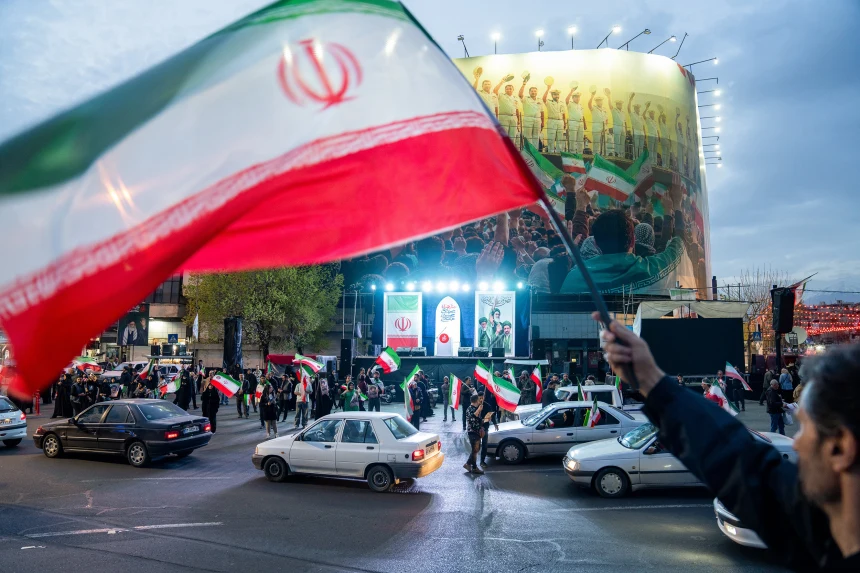
On 28th of February, a new phase of the war in the Middle East began with attacks by the U.S. and Israel against Iran. Newspapers and numerous statements claimed that the main reason for the attacks was regime change. The attacks tried to be portrayed as a means of ensuring the rights and freedoms of the Iranian people. In reality, just as Tom Barrack, the U.S. ambassador to Turkey, stated during the war in Rojava, the Middle East “is not made for democracy but for monarchies”5.This statement clearly explains the U.S. attitude towards Middle East.
The goal of the attacks is not regime change in favor of the Iranian people, but rather the establishment of a regime agreed upon by the U.S. and Israel as part of the game these powers are playing in the Middle East as part of the Third World War.
Additionally, Trump and Netanyahu share a common interest in this war, which is the upcoming elections. Between late October and early November, a decisive electoral moment will take place: the midterm elections in the U.S. and the general elections in Israel. For this reason, Trump would benefit from a victory to claim and, above all, from a distraction from the consequences that the Epstein files6 could cause. At the same time, Netanyahu needs to resolve the internal crisis in Israel and hopes to do so by building unity against a historic common enemy, Iran.
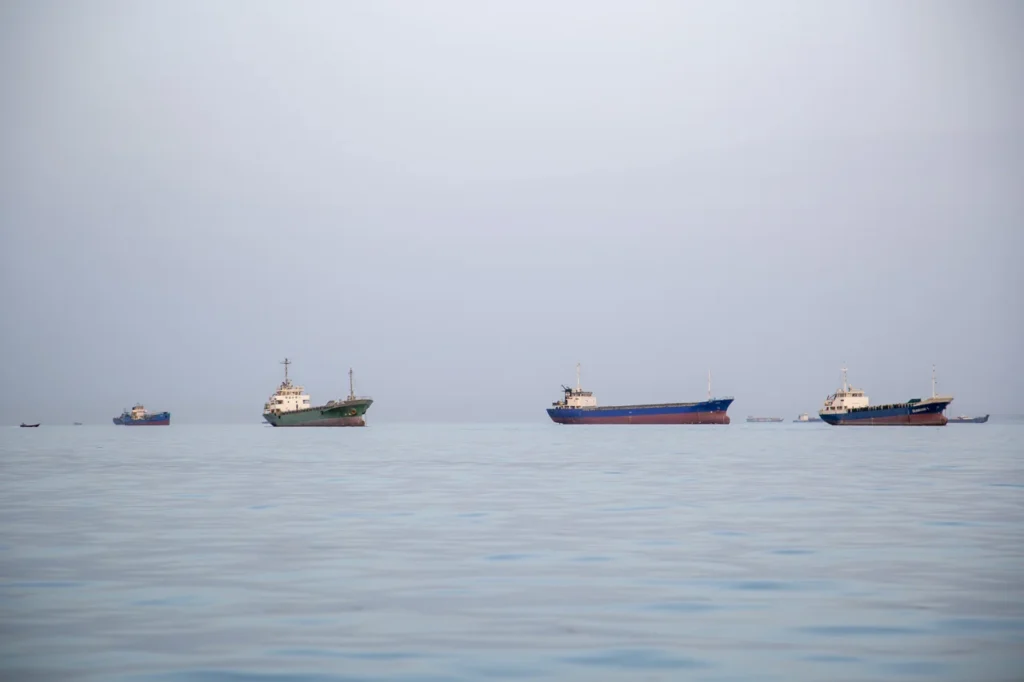
Beyond the elections, there is also a profound economic reason linked to the global market. The desire to weaken the Iranian regime at this moment comes from the fact that it represents an obstacle to global market initiatives.
But the U.S. and Israel are not completely aligned on their goals. What Trump intended to do was a fast intervention forcing the Iranian establishment to accept pro-Western successors to Ali Khamenei. For Netanyahu the issue is different: he looks for the total disintegration of the Islamic Republic and all its regional proxies. It therefore appears that Trump has been drawn into a conflict longer than expected by Israel, which seeks total victory. It is with this purpose that Israel is launching the ground invasion of southern Lebanon, while simultaneously continuing the annexation of the West Bank. Israel has reopened its seven war fronts (Iran, Lebanon, Yemen, Syria, Gaza, Iran, West Bank) because its ultimate goal is the project of the Greater Israel7, stretching from the Sinai (east of the Nile) to Syria (west of the Euphrates), encompassing parts of the territories of Egypt, Palestine, Syria, Iraq, Saudi Arabia, and Jordan.
On the other hand, the regime in Iran is seeking to preserve itself and to continue to impose itself as a status quo power in the region. Like every nation-state in the Middle East, throughout its existence Iran has remained in a state of constant war not only externally, but also internally. The situation is the same today: the regime is also facing internal opposition. There are forces in Iran that are neither in favor of external intervention nor supportive of the regime. These forces, which aspire to democracy in Iran, show that there are not just two possible outcomes to this conflict. In the clash between the hegemonic ambitions of the U.S. and Israel and Iran’s desire to maintain the oppressive status-quo, the people’s aspiration for democracy can emerge.
BUILDING UP ANOTHER WAY
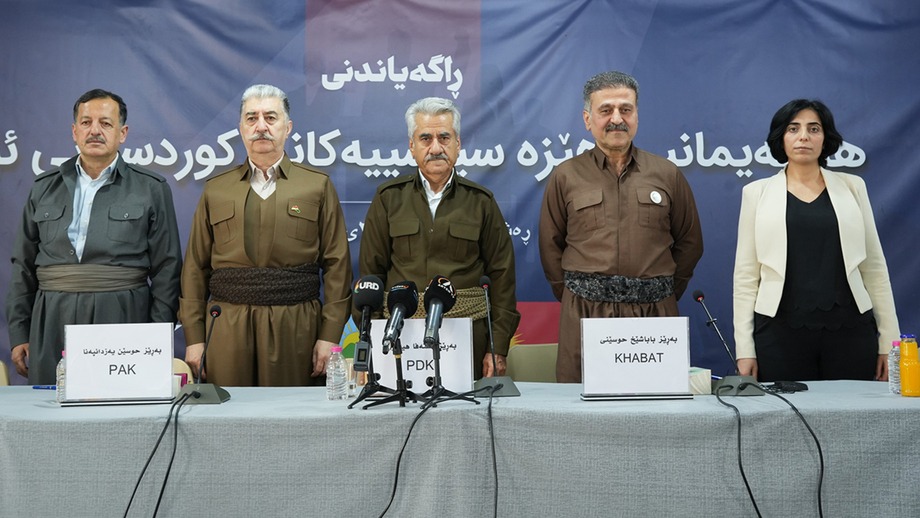
A significant step in this direction was taken in early 2026, when an alliance of six Kurdish parties from Rojhilat (Iranian Kurdistan) was officially formed on February 22nd. The alliance grew out of the popular protests in January and the regime’s subsequent repressive response. The alliance’s positions and objectives were clarified in its first declaration: to fight for the overthrow of the Islamic Republic of Iran, to secure the Kurdish people’s right to self-determination, and to establish a national and democratic entity based on the political will of the Kurdish nation in Rojhilat (Iranian Kurdistan). Other points the alliance shares include the development of relations with other oppressed peoples in Iran, and the development of democratic local self-administrative systems that guarantee the participation of all religious, ethnic, and linguistic groups, as well as women’s rights.
This alliance is important because it is actively pursuing a program that opposes the theocratic regime of the Islamic Republic, the Iranian monarchists, and the hegemony of the imperialist forces of the United States and Israel.
The alliance is composed of organizations with different histories and political lines. There are parties such as the historic Democratic Party of Iranian Kurdistan (PDKI)8, the Komala Party of Iranian Kurdistan9, the Komala of the Toilers of Kurdistan10, the Xebat Party11, the nationalist Party for the Freedom of Kurdistan (PAK)12, and the Party for a Free Life in Kurdistan (PJAK)13, which aligns with the ideas of democratic confederalism14 advanced by Abdullah Öcalan and the Kurdistan Liberation Movement.
After February 28th, Trump tried to build up alliances with various Kurdish leaders in the region. Thanks in part to the coalition, it was possible to take a clear stance: the U.S. is not to be trusted, and the Kurds will not serve as proxies for any regional or global power, as stated by PJAK spokesperson Rivar Abdanan15.
The Kurdish parties in Rojhilat (Iranian Kurdistan) are united by a shared experience of oppression and annihilation, to which each has responded differently. Today, through this alliance, they are building their strength precisely by uniting these differences on the basis of a common goal of self-determination. They are opening a “third path” towards democracy, both outside of the global capitalist system and the nation-state status quo. It is an example of a strong and resolute democratic stance that goes beyond the polarizations generated by the conflicts of the Third World War. The determination not to ignore their differences, but to unite them and make them a source of collective strength; the centrality of peace, democracy, and the self-determination of peoples.
What is taking place on Iranian ground, and which is spreading throughout the Middle East, is a conflict with no winners. Any outcome in which a hegemonic power or a nation-state prevails over others cannot be called a victory, neither for society nor for those fighting this war. There is no perspective of victory other than a democratic solution in which the people play the leading role: this is the victory that should be aimed for, against the Third World War unfolding before our eyes.
- The Cold War started after the end of the Second World War and lasted until the dissolution of the Soviet Union in 1991. The name comes from the fact that no direct fighting happened between U.S. and the Soviet Union, the two opponents – or two blocs. At stake was not only economic influence but also ideological influence on the whole globe. ↩︎
- https://theamargi.com/posts/they-had-only-stones-witnesses-describe-deadly-crackdown-in-malekshahi ↩︎
- https://www.vaticannews.va/en/pope/news/2022-08/pope-francis-wwii-anniversary-ukraine-war-peace-appeal.html ↩︎
- Abdullah Öcalan, Beyond State, power and violence, 2023, PM Press, 10th Edition ↩︎
- https://www.meforum.org/mef-observer/ambassador-tom-barrack-keeps-misreading-the-middle-east ↩︎
- The Epstein files are a collection of millions of documents, images and videos, only partially released, containing evidence of the sex trafficking activities of the American financier Jeffrey Epstein. In these files, the connections with numerous public and political figures, not only from the U.S., emerged. People reacted with strong outrage, and there was a risk of widespread political chaos. ↩︎
- “Greater Israel” is a concept that accompanied the Zionist movement since its birth. It’s a vision of the State of Israel based on a biblical interpretation of Genesis 15:18-21, that describes a land from the Nile to the Euphrates. In the current context, it is an ideological and political project rooted also in the Israeli state, where leaders like the Finance Minister Bezalel Smotrich are supporting and following it. ↩︎
- It is the oldest party in the alliance and was founded in 1945 in Mahabad (north-west of Rojhilat). In its early years, the party promoted a program of cultural and identity revival, establishing schools, newspapers, and national public performances. In the 1970s, the line it pursued was “democracy in Iran, autonomy in Kurdistan,” realigning itself with democratic-socialist but not Marxist positions.
After the Ayatollahs’ revolution, the party attempted to negotiate autonomy agreements, but the talks were stopped by the assassination of the leader of the PDKI. Today, the party essentially represents the nationalist stance of Rojhilat but adopts a federalist approach. It is currently the second most significant party in the Alliance, with more than 1,000 fighters and the capacity for mobilization and influence within Iran thanks to its long history. ↩︎ - This organization has several internal factions. Founded in the late 1970s by left-wing student circles (which had been organizing since the late 1960s), it has always been affected by deep internal divisions. It has a class-based and Marxist orientation (collaborating with the Communist Party of Iran), and when Ruhollah Khomeini launched his first military offensive, it was able to resist with its own peshmerga.
Today, the faction Komala Party of Iranian Kurdistan represents a shift toward social democracy and Kurdish national-democratic politics. ↩︎ - It is a faction of Komala. It has a socialist foundation struggles for Kurdish national liberation. ↩︎
- Founded in 1980, it has a religious as well as a national perspective and is the most religiously oriented party with an Islamic orientation.
In recent decades, Xebat has moved toward more democratic and less traditional nationalist positions, for example by opening up to gender equality and pluralism, and by pursuing a perspective of self-determination within the framework of a democratic and parliamentary Iran that guarantees autonomy for the Kurds rather than independence. It also has its own peshmerga force. ↩︎ - It is also a faction of the main Komala and was founded in 2006. It operates from a pro-independence perspective and declared war on Iran in 2017.
Ideologically, it advocates for an explicit pan-Kurdish nationalism and is the party most closely aligned with a statist perspective. ↩︎ - It is the largest organization that is part of the Alliance and was founded in 2004. It draws inspiration from and acts in ideological alignment with Öcalan’s ideas and political proposals. It fights for autonomy and possesses both a very strong military and political structure. In particular, its distinctive feature is its emphasis on women’s liberation. In addition to the parties and the self-defense structures, there is also the KODAK (Organization for a Free and Democratic Society of Rojhilat), founded in 2014, which plays a more social role in engaging society in the political sphere.
Within the Coalition, it is the party with the most fighters (approximately 3,000) and the strongest presence in Iran and Rojhilat, with excellent ties within the Kurdish regions.
With the outbreak of war on 28th of February, the PJAK called on the public to form self-defense and protection committees and to join the guerrillas. ↩︎ - https://democraticmodernity.com/the-main-principles-of-democratic-confederalism/ ↩︎
- https://ilmanifesto.it/i-curdi-non-sono-il-proxy-di-nessuno-necessaria-unopposizione-unita ↩︎